
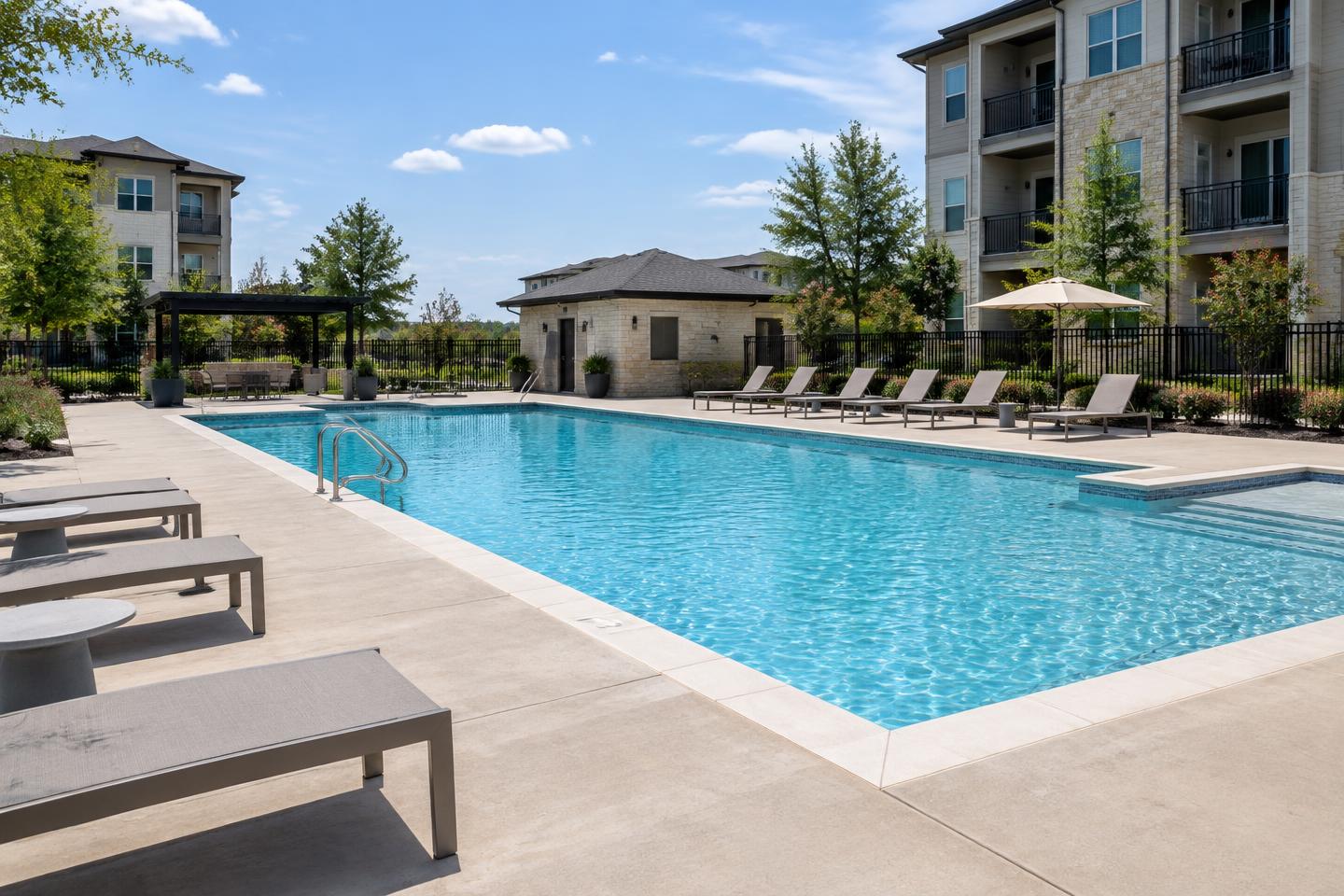
Commercial pools need a scope built around the way the property operates. For commercial pool cleaning, that means looking at the pool, the people responsible for it and the conditions that change between visits—not just completing a generic checklist.
What this service can cover
The final scope depends on equipment, use and site responsibilities. These are the tasks to discuss during a property review.
Skimming visible debris and checking baskets before circulation is restricted.
Brushing walls, steps and waterlines where buildup begins.
Vacuuming or cleaning the floor according to the pool's finish and debris load.
Checking the deck and noting visible conditions that need the property's attention.
Cleaning the areas that guests notice—and the ones they don't
Skimming removes floating material, but debris also settles in floor transitions, steps, corners and around fittings. Brushing breaks up film at the waterline and on surfaces that a quick pass with a net will miss. Vacuuming method and brush choice should match the pool finish so that cleaning does not damage it.
The right cleaning sequence also depends on circulation. A basket packed with leaves can reduce flow; brushing a dirty surface without a plan to capture the loosened material can leave the water cloudy. A useful visit considers both what is removed and how the pool will clear afterward.
Planning around Houston weather and pool use
Wind, heavy rain and nearby landscaping can change the debris load suddenly. A property with trees over the deck may need a different routine from an exposed courtyard pool, even if the pools are the same size. Seasonal attendance, outdoor events and construction nearby can also change what a normal cleaning visit needs to cover.
Agree in advance what happens after a storm: which conditions trigger an extra visit, who checks the pool before opening and who decides whether visibility is adequate for use. Cleaning should not be treated as a substitute for water testing or safe operating decisions.
A clearer scope for property teams
Put the actual pool features in the scope: main pool, spa, wading area, steps, attached water features and accessible baskets. Clarify whether deck work, tile stain removal, pressure washing and equipment maintenance are separate tasks. That distinction prevents a routine cleaning visit from being mistaken for a full operational inspection.
A good handoff notes persistent stains, damaged fittings or debris that returns quickly. Recurring material may point to landscape runoff, a circulation dead spot or a filter issue rather than a need for more skimming alone.
When to take a closer look
- After storms, heavy bather use or landscaping work.
- When stains, cloudy water or recurring debris affect appearance.
- When a new property team needs a documented cleaning scope.
What to have ready for a conversation
- Pool finish, size and any attached water features
- Typical debris sources and recent storm impacts
- Who tests water and makes opening decisions between visits
Questions to settle before work begins
What surfaces and water features are included?
How are storm visits and unusual debris handled?
Who handles deck and landscape debris outside the pool?
How to evaluate the result
Agree on a starting condition before work begins: recent logs, visible symptoms, equipment readings and any open findings. After the visit, compare those records with what was actually observed and corrected. A completed task and a resolved problem are not always the same thing; note what still needs monitoring, approval or a second check.
If a condition affects water clarity, circulation, disinfection or safe access, the facility team should use its closure and escalation procedure rather than waiting for the next scheduled visit. Reopening decisions belong with the responsible operator under the requirements that apply to the site.
CPO oversight and health-department rules
A Certified Pool & Spa Operator (CPO) credential is training, not a permit or a substitute for the facility operator’s responsibilities. Identify who is trained to oversee the pool, who performs and records tests during open hours, and who has authority to close it when conditions are unsuitable. Check the qualifications required for your particular facility with its regulator; this page does not establish that any member of our team holds a CPO credential.
Texas public-pool requirements are published by the Texas Department of State Health Services. Permits, inspections and additional rules may be administered by the city or county health department responsible for the property address. Do not assume City of Houston rules apply to every suburb. Keep permits, water logs and inspection correspondence available, and confirm the current requirements directly with the responsible authority.
For a checklist of information to gather before an inspection, see inspection preparation. A service visit does not certify compliance or replace official inspection.
Questions property teams ask
Does cleaning include water testing?
Not automatically. Put testing frequency, recordkeeping and who checks the water between cleaning visits in the written scope.
What changes after a storm?
Debris, runoff and equipment conditions may need a separate assessment. Check water conditions and circulation before deciding whether routine cleaning is sufficient.
Facility requirements vary by address, pool type and authority. Confirm site-specific obligations with the applicable local authority. Service scope and availability are confirmed for each property.