
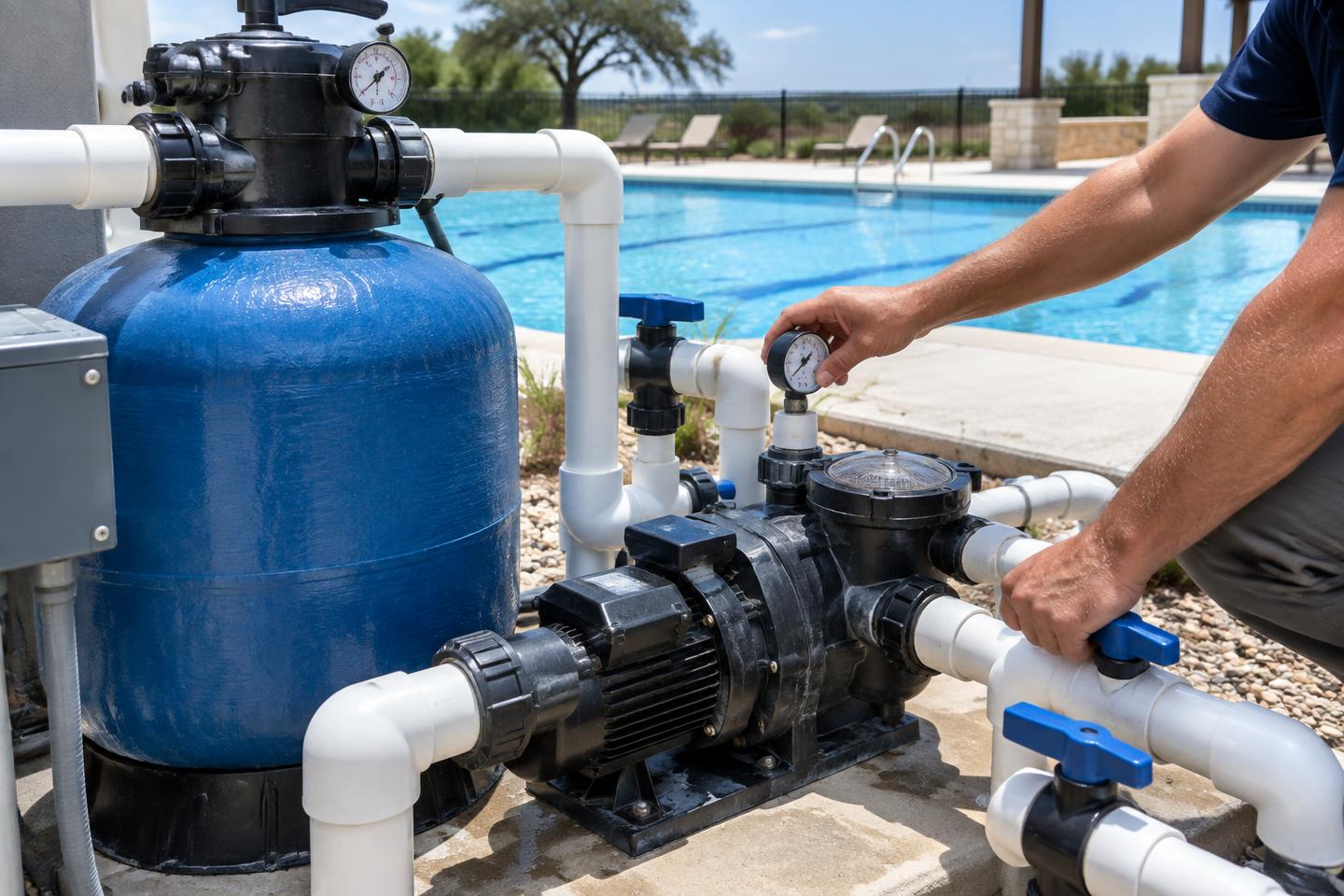
Commercial pools need a scope built around the way the property operates. For pool equipment repair, that means looking at the pool, the people responsible for it and the conditions that change between visits—not just completing a generic checklist.
What this service can cover
The final scope depends on equipment, use and site responsibilities. These are the tasks to discuss during a property review.
Reviewing symptoms, operating history and visible alarms.
Checking accessible pump, filter and control components.
Explaining the likely fault and repair options before work proceeds.
Retesting operation after approved repair work.
Start with the symptom, not a replacement part
Low flow can stem from a blocked basket, valve position, air leak, filter restriction or pump fault. A breaker trip may involve electrical work outside a pool technician's scope. Document when the problem began, whether it is intermittent, what alarms appeared and what changed before the failure. That history narrows the investigation without assuming the most expensive component has failed.
Diagnosis should include what can be observed safely at the pad: leaks, unusual sound, displayed faults, valve positions and the system's response during normal operation. Live electrical, gas and pressurized components require appropriately qualified people and safe isolation procedures.
Separate urgent stabilization from the permanent fix
When equipment stops, the immediate question is whether the pool can continue to operate safely. A temporary operating adjustment is not the same as a completed repair. Property managers need to know which functions are unavailable, what monitoring is required and who makes a closure decision under applicable rules.
For a proposed fix, ask for the likely cause, the parts or specialist labor involved and how the result will be tested. If replacement is advised, compare it with repair in the context of age, condition and recurring failures—not just the price of a single part.
Confirm the system after repair
A pump starting once is not proof that the circulation system has returned to normal. Check for stable prime, expected flow, leaks, filter behavior and alarms across a normal operating cycle. Controls and timers should be left in their intended settings and any changed configuration should be recorded.
Keep a concise record of the original symptom, work authorized, parts changed and post-repair observations. It is particularly valuable when another technician or facility shift encounters the equipment later.
When to take a closer look
- When a pump loses prime or trips repeatedly.
- When filter pressure or flow changes unexpectedly.
- When equipment alarms interrupt normal operation.
What to have ready for a conversation
- Equipment make/model, displayed alarms and prior repairs
- When the issue occurs and whether flow or temperature changed
- Site access, shutdown requirements and repair authorization contact
Questions to settle before work begins
Is the repair or replacement recommendation documented?
Is there an outage plan while parts are sourced?
Will the system be tested under normal operating conditions?
How to evaluate the result
Agree on a starting condition before work begins: recent logs, visible symptoms, equipment readings and any open findings. After the visit, compare those records with what was actually observed and corrected. A completed task and a resolved problem are not always the same thing; note what still needs monitoring, approval or a second check.
If a condition affects water clarity, circulation, disinfection or safe access, the facility team should use its closure and escalation procedure rather than waiting for the next scheduled visit. Reopening decisions belong with the responsible operator under the requirements that apply to the site.
CPO oversight and health-department rules
A Certified Pool & Spa Operator (CPO) credential is training, not a permit or a substitute for the facility operator’s responsibilities. Identify who is trained to oversee the pool, who performs and records tests during open hours, and who has authority to close it when conditions are unsuitable. Check the qualifications required for your particular facility with its regulator; this page does not establish that any member of our team holds a CPO credential.
Texas public-pool requirements are published by the Texas Department of State Health Services. Permits, inspections and additional rules may be administered by the city or county health department responsible for the property address. Do not assume City of Houston rules apply to every suburb. Keep permits, water logs and inspection correspondence available, and confirm the current requirements directly with the responsible authority.
For a checklist of information to gather before an inspection, see inspection preparation. A service visit does not certify compliance or replace official inspection.
Questions property teams ask
Does low flow mean the pump needs replacement?
Not necessarily. Baskets, valves, air leaks and filter restrictions are among the conditions to investigate before choosing a repair.
Can the pool stay open during an equipment fault?
That depends on the fault and applicable operating rules. The operator should assess safe circulation and water conditions and follow its closure procedure.
Facility requirements vary by address, pool type and authority. Confirm site-specific obligations with the applicable local authority. Service scope and availability are confirmed for each property.