
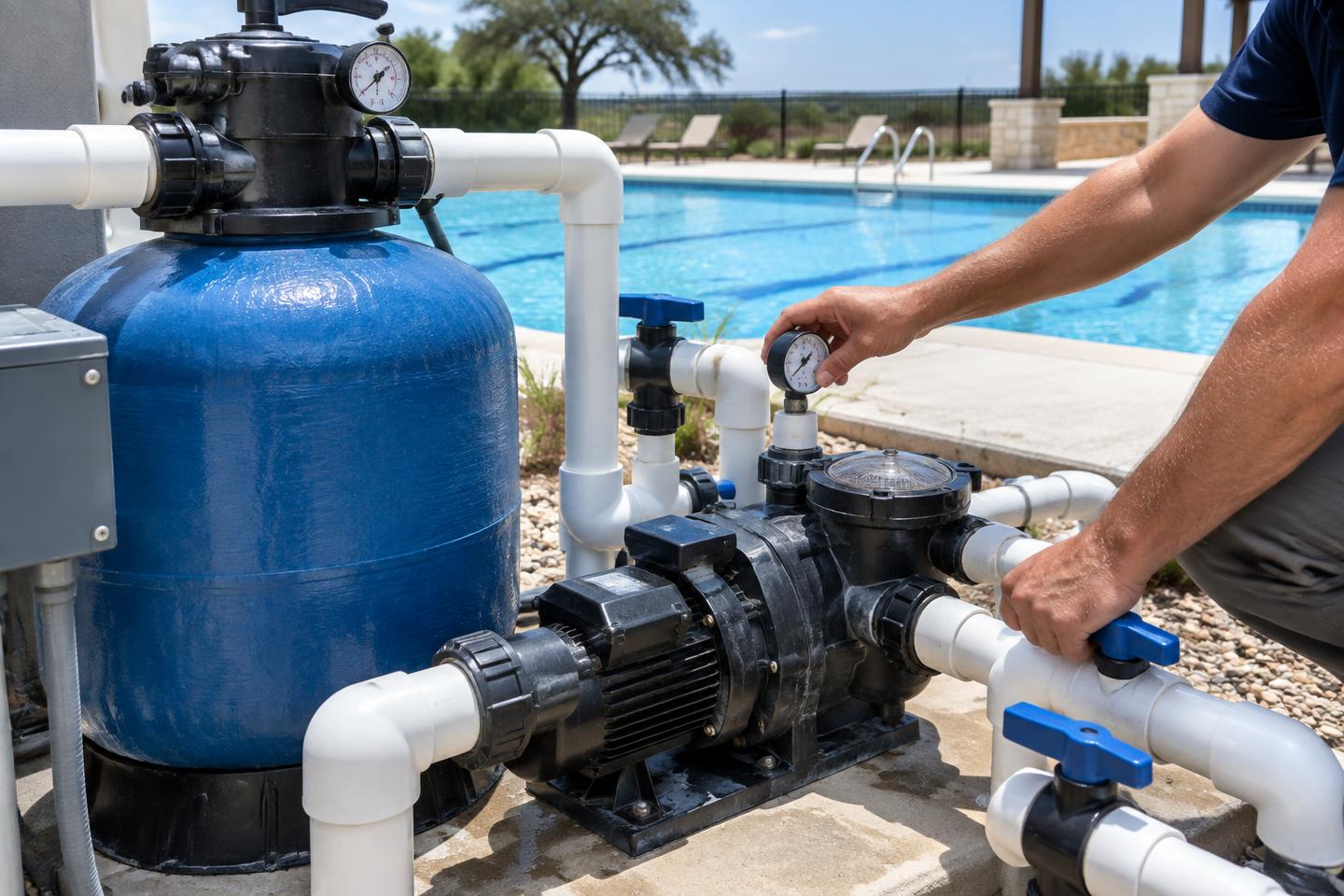
Commercial pools need a scope built around the way the property operates. For pool heater service, that means looking at the pool, the people responsible for it and the conditions that change between visits—not just completing a generic checklist.
What this service can cover
The final scope depends on equipment, use and site responsibilities. These are the tasks to discuss during a property review.
Reviewing displayed fault codes and setpoints.
Checking flow conditions and accessible controls.
Identifying when a licensed trade specialist is needed.
Confirming operating behavior after approved work.
A heater fault may begin elsewhere in the system
A heater that will not fire can be responding to insufficient water flow, an incorrect setpoint, an automation schedule, a sensor fault or a problem in the heater itself. Note any fault code exactly as displayed and whether the unit locks out immediately or after running. Repeated resets can erase useful clues and should not replace diagnosis.
A pool and spa sharing equipment may have different temperature expectations and valve settings. The technician needs to understand the intended operating mode before interpreting a reading as a failure.
Keep specialist work in the right hands
Gas supply, combustion and line-voltage electrical work may require an appropriately licensed or qualified trade. A pool-side assessment can document symptoms and accessible flow or control conditions, then identify when a specialist should take over. Do not have site staff bypass safety switches or attempt a repair on energized equipment.
If a heated amenity is unavailable, tell the property team what is affected and which operating decisions remain theirs. A replacement decision should consider equipment condition and compatibility with the existing circulation and control systems.
Verify heat under normal operation
After approved work, observe whether the heater starts, runs without repeating the fault and responds to the intended setpoint. Confirm that circulation is adequate and that control settings are returned to the property's normal schedule.
Record the symptom, diagnostic findings, authorized work and any outstanding monitoring needs. If the fault is intermittent, a follow-up observation may be more informative than declaring success after a single restart.
When to take a closer look
- When water temperature does not match the setting.
- When a heater locks out or short-cycles.
- When a spa or therapy pool has an unexpected heat outage.
What to have ready for a conversation
- Heater model, displayed code and recent service
- Target temperature and when the failure occurs
- Whether the heater serves a pool, spa or both
Questions to settle before work begins
Who is authorized to work on gas or electrical components?
What shutdown procedures apply on site?
Is a replacement estimate preferable to repeated repairs?
How to evaluate the result
Agree on a starting condition before work begins: recent logs, visible symptoms, equipment readings and any open findings. After the visit, compare those records with what was actually observed and corrected. A completed task and a resolved problem are not always the same thing; note what still needs monitoring, approval or a second check.
If a condition affects water clarity, circulation, disinfection or safe access, the facility team should use its closure and escalation procedure rather than waiting for the next scheduled visit. Reopening decisions belong with the responsible operator under the requirements that apply to the site.
CPO oversight and health-department rules
A Certified Pool & Spa Operator (CPO) credential is training, not a permit or a substitute for the facility operator’s responsibilities. Identify who is trained to oversee the pool, who performs and records tests during open hours, and who has authority to close it when conditions are unsuitable. Check the qualifications required for your particular facility with its regulator; this page does not establish that any member of our team holds a CPO credential.
Texas public-pool requirements are published by the Texas Department of State Health Services. Permits, inspections and additional rules may be administered by the city or county health department responsible for the property address. Do not assume City of Houston rules apply to every suburb. Keep permits, water logs and inspection correspondence available, and confirm the current requirements directly with the responsible authority.
For a checklist of information to gather before an inspection, see inspection preparation. A service visit does not certify compliance or replace official inspection.
Questions property teams ask
Why does a heater display a flow fault?
The heater may be reacting to insufficient circulation rather than an internal heater failure. Preserve the fault code and have the system assessed safely.
Who should work on gas or electrical parts?
Gas and line-voltage work should be assigned to appropriately qualified trades. Site staff should not bypass safety controls.
Facility requirements vary by address, pool type and authority. Confirm site-specific obligations with the applicable local authority. Service scope and availability are confirmed for each property.